Visiting these floating islands on Lake Titicaca was definitely a highlight of our trip. The people who live here are proud, resilient, and resourceful. They are amazing!
Our guide, William, had spent much of his training on the islands. He could understand the native language, Aymara, though he couldn’t speak it himself. Most of the islanders are multilingual: Aymara is their native tongue, Quechua connects them to Incan heritage and trade, and Spanish allows communication with the outside world.
No one knows for certain why these people began living on floating islands. Even the islanders themselves only have theories. Some say their ancestors were exiled; others believe they fled from danger. They say it began with a single reed boat that expanded as families grew, eventually evolving into entire islands. What is certain is that they have lived this way since even before the Incas.
Our visit began with a demonstration of how the islands float. Each island starts with large reed roots that naturally float, layered with fresh reeds on top. As the bottom layers slowly sink, new reeds are continually added to keep the islands stable. The men gather food and collect more reeds while the women guide visitors and explain daily life.
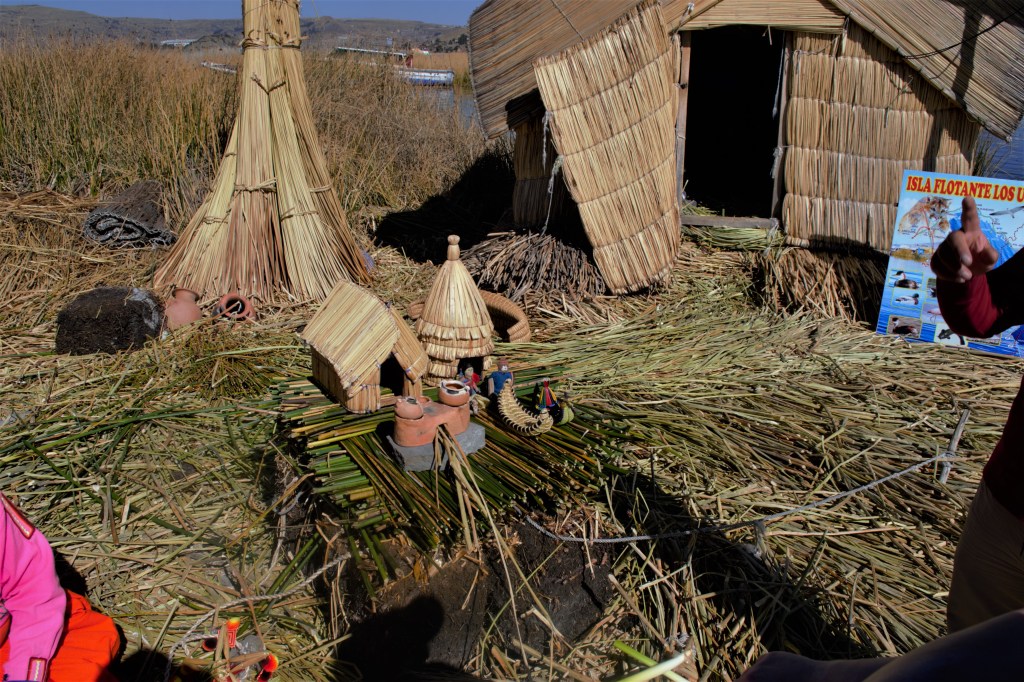
Every island belongs to a family, and each house on the island serves a purpose – bedrooms, kitchens, and common spaces. The bedrooms are raised to protect against moisture and prevent rheumatism, while the kitchens have stone floors to keep fires safe. Life here is communal, but it also has clear rules: if a family member doesn’t contribute, their section of the island can literally be cut away and set adrift. There’s no tolerance for shirkers!

The tour guides rotate which of the more than 80 man-made islands they visit. The island community shares in the profits of the entrance fee. They use the money they make to buy medicine and school books from the mainland. William warned us not to tip them – they are very proud of their ability to provide for themselves without what they consider to be charity.
Many of the children go to school on the mainland, usually taught by missionaries. Many of the children end up leaving the culture altogether and get jobs on the mainland. This was really sad to me. I hate to think about such a beautiful culture dwindling away.
The matriarch of the island we visited was named Eliana. She dressed us in her clothes. She was beautiful and welcoming. She didn’t speak a lot of English, but she spoke enough. As we wore her clothes and visited her bedroom, she said proudly to us “this is my home.” I felt honored to be there.
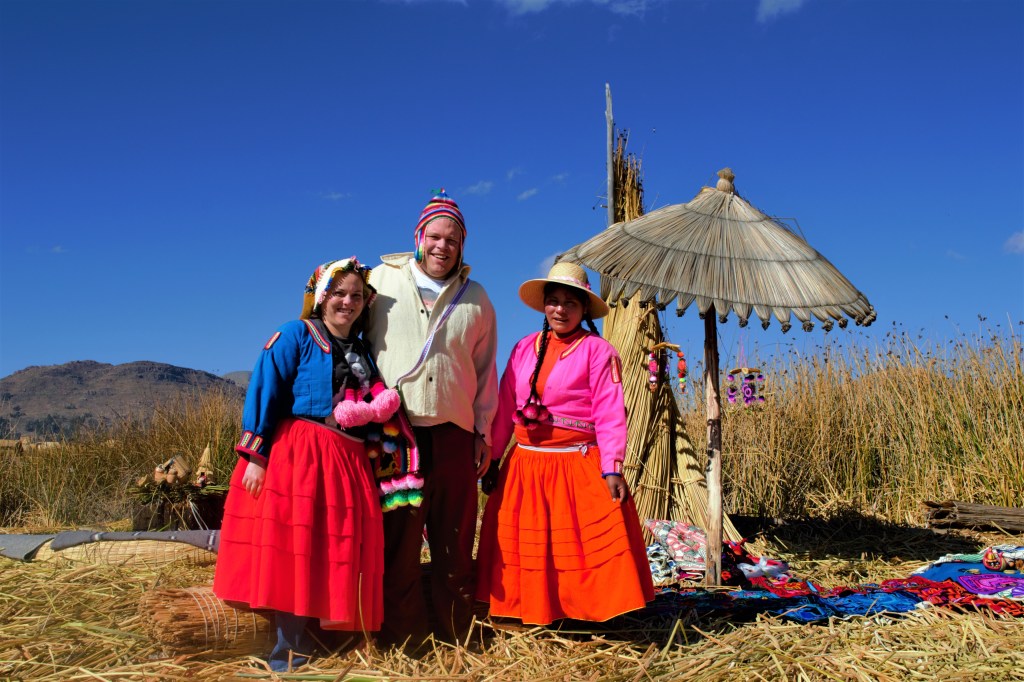
I am sure Eliana has long forgotten us, but we will never forget her and our short visit in her home! My next post I’ll share the song she sang for us as a thank you for our visit.
If you like this post, you can subscribe for free using the Subscribe button on the bottom right corner of your screen!

 Packing for Adventure
Leave a reply to cindylouisejonesgmailcom Cancel reply