Cultural Demonstrations
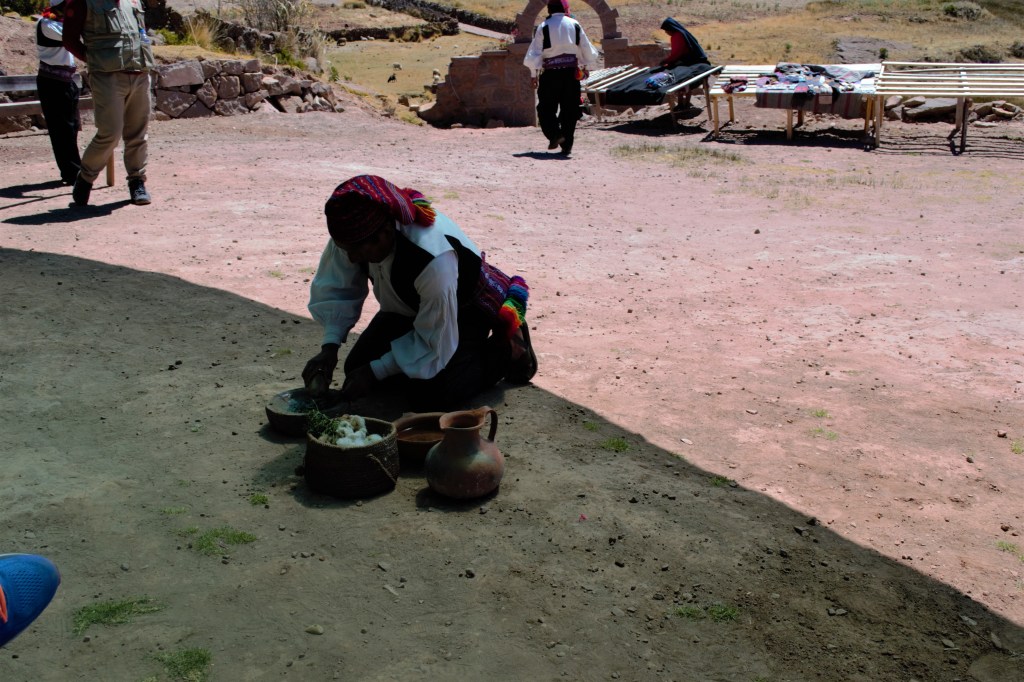
Right outside the restaurant, one of the men gave us a fascinating demonstration of how they clean and dye llama and alpaca wool. On Taquile, the men are the weavers, which is the opposite of most other Peruvian communities where women typically do the weaving.
This culture has a rich system of traditions and symbols. The way people wear their hats reveals their social and marital status. Once the men reach a certain age, they must prove their skill and “manhood” by weaving their own hat. It must be woven tightly enough to hold water for a specific amount of time. If it leaks, they’re not permitted to marry or hold certain positions in society. The men’s belts also have special meaning. When Taquile men marry, their wives cut their hair and give it to their husbands, who weave it into the belt they wear every day. It’s a powerful symbol of unity and love.
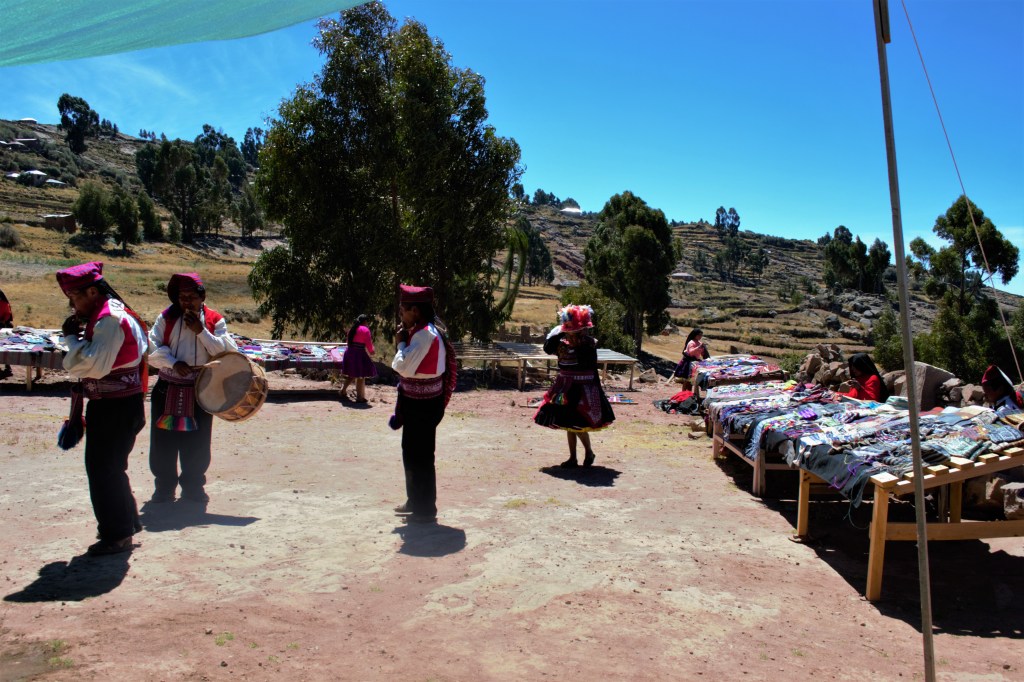
After the demonstration, three men and one woman performed a lively dance accompanied by pipes and drums. Their energy, combined with the backdrop of the Andes and the shimmer of Lake Titicaca, made the moment unforgettable.
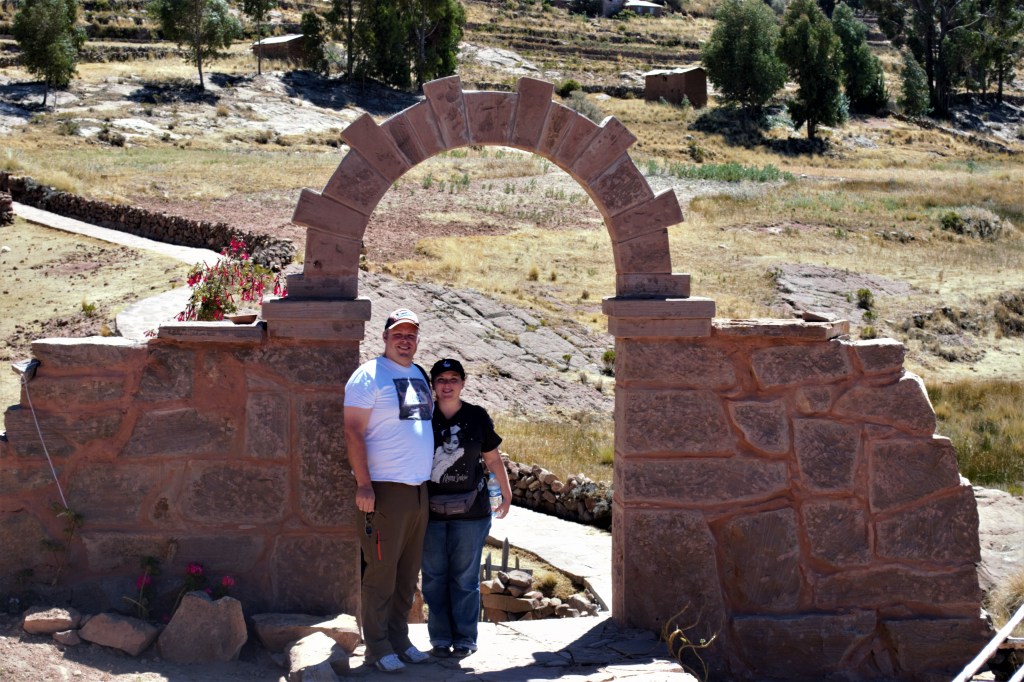
The photos do not do justice to the experience, but here they are anyway! Me enjoying the dancing, the sweeping views, and standing beside one of the locals.


Hiking the Other Side of Taquile
After lunch and the time spent with the locals, we followed William along the opposite side of Taquile, listening to stories about local customs as we hiked. He was impressed with how easily we handled the climb – apparently all that training for Machu Picchu paid off after all!
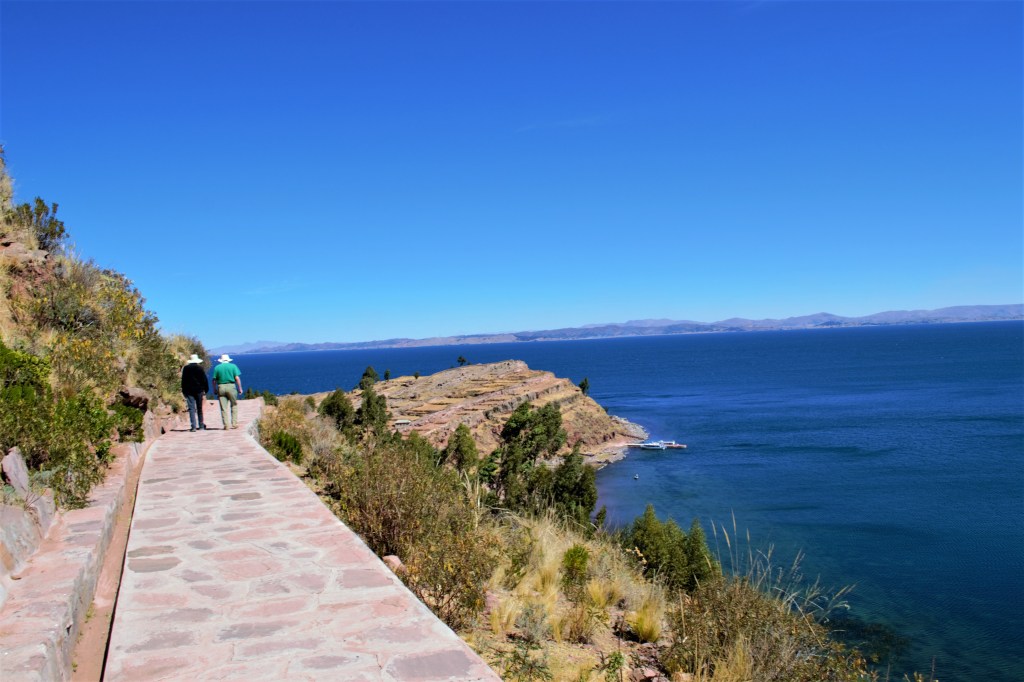
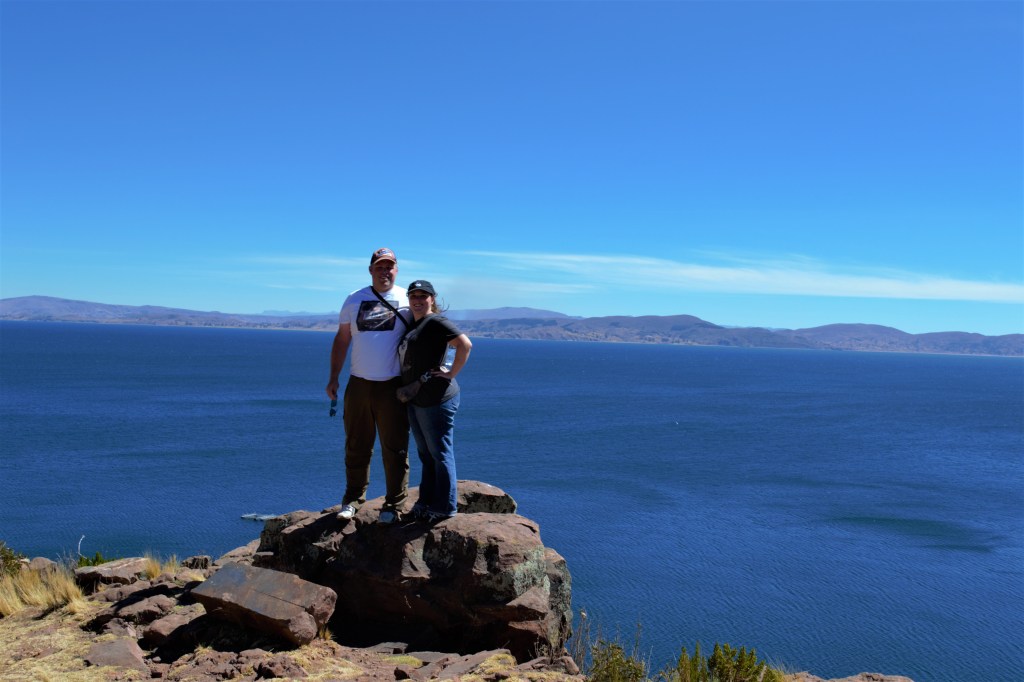
The island’s terraced farmland reminded me of Machu Picchu, layered with care and history. We walked along a pathway built by the locals using funds from tourism, surrounded by stunning lake views at every turn. I couldn’t resist stopping for photos. I’m a sucker for a good picture spot, and Taquile offered them in abundance.
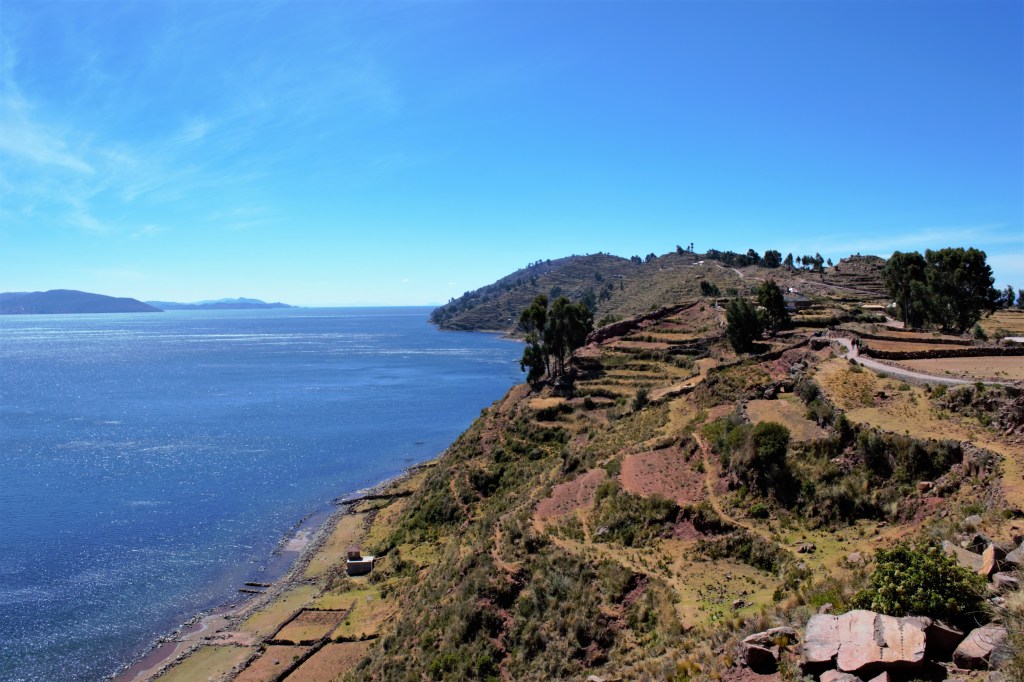
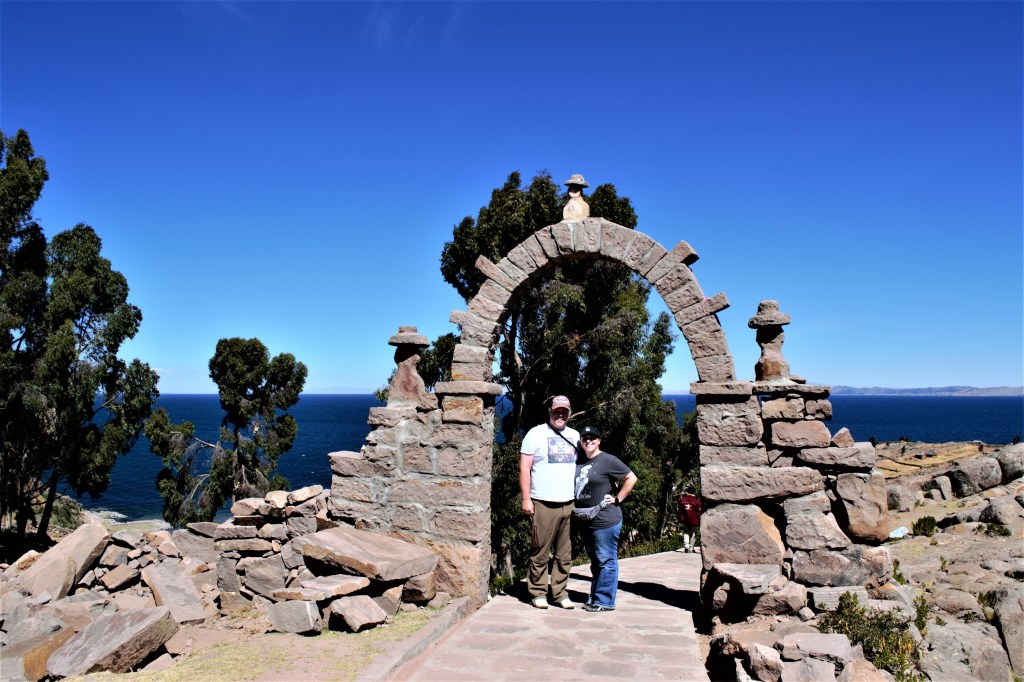
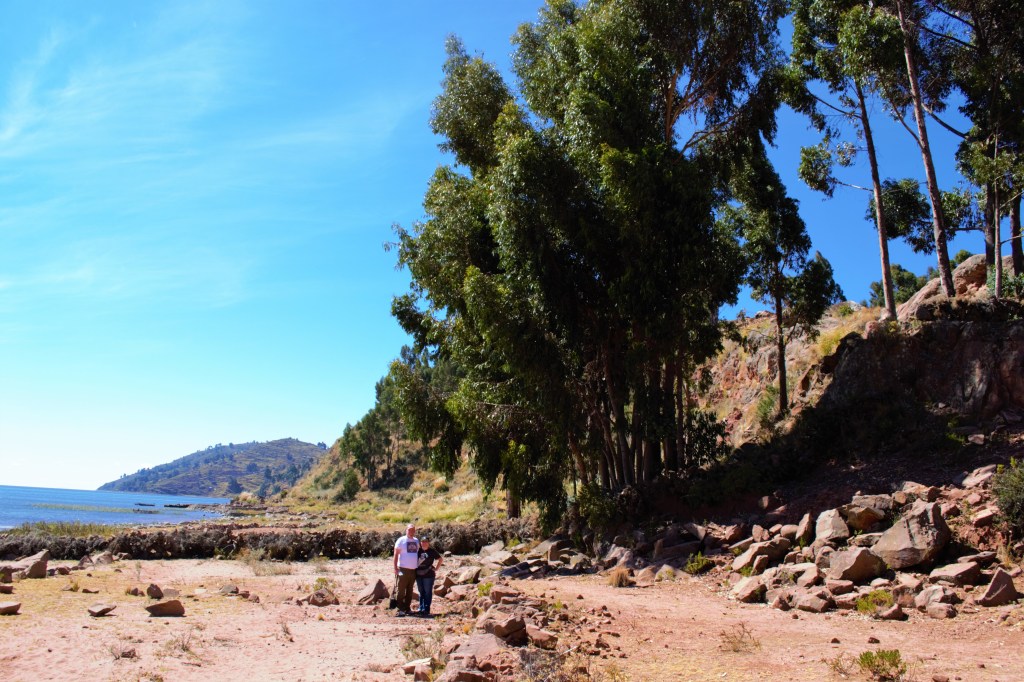
We reached another archway, different from the one near the restaurant. William explained that it plays a role in wedding ceremonies, where couples walk through it as part of their celebration. From there, we made our way down to the shore; a beautiful, peaceful spot where our boat waited to take us back to Puno.
As we looked out over Lake Titicaca one last time, we felt a mix of gratitude and awe. This day had been more than sightseeing: it was a glimpse into a community that lives simply, proudly, and with purpose.
Next up, I’ll dive into the nerdy linguistic details behind the names Taquile and Titicaca: their linguistic roots, what they really mean, and the surprising stories those meanings tell about this incredible region.
If you like this post, you can subscribe for free using the Subscribe button on the bottom right corner of your screen!


 Packing for Adventure
Leave a comment