In 2022, we decided it was time to start planning our next international trip, and our first one since Covid. We were ready for something big, memorable, and different from anywhere we had been before.
After a lot of brainstorming, research, and daydreaming, we narrowed our list down to three very different destinations: Iceland, Egypt, and Thailand.
Of course we’d still love to visit both Iceland and Egypt someday. But when it came time to actually start planning, Thailand pulled ahead.
Why We Picked Thailand
During the early planning and intel-gathering stage, Thailand was simply the easiest place to move forward with. We could find information, build an itinerary, and picture what the trip would look like. Things started falling into place.
Egypt, on the other hand, was much harder to plan. The logistics felt more complicated, and in some areas, visitors may require security escorts or armed guards. That didn’t necessarily scare us off, but travel agents were not responding timely, or warmly, enough to continue planning.
As for Iceland, the cost estimates added up quickly. Due to the higher cost of living in Iceland compared to Thailand, it was clear that Iceland would be a significantly more expensive trip.
Another factor was Covid restrictions – Thailand had relatively lenient rules compared to many other places.
Phang Nga Bay
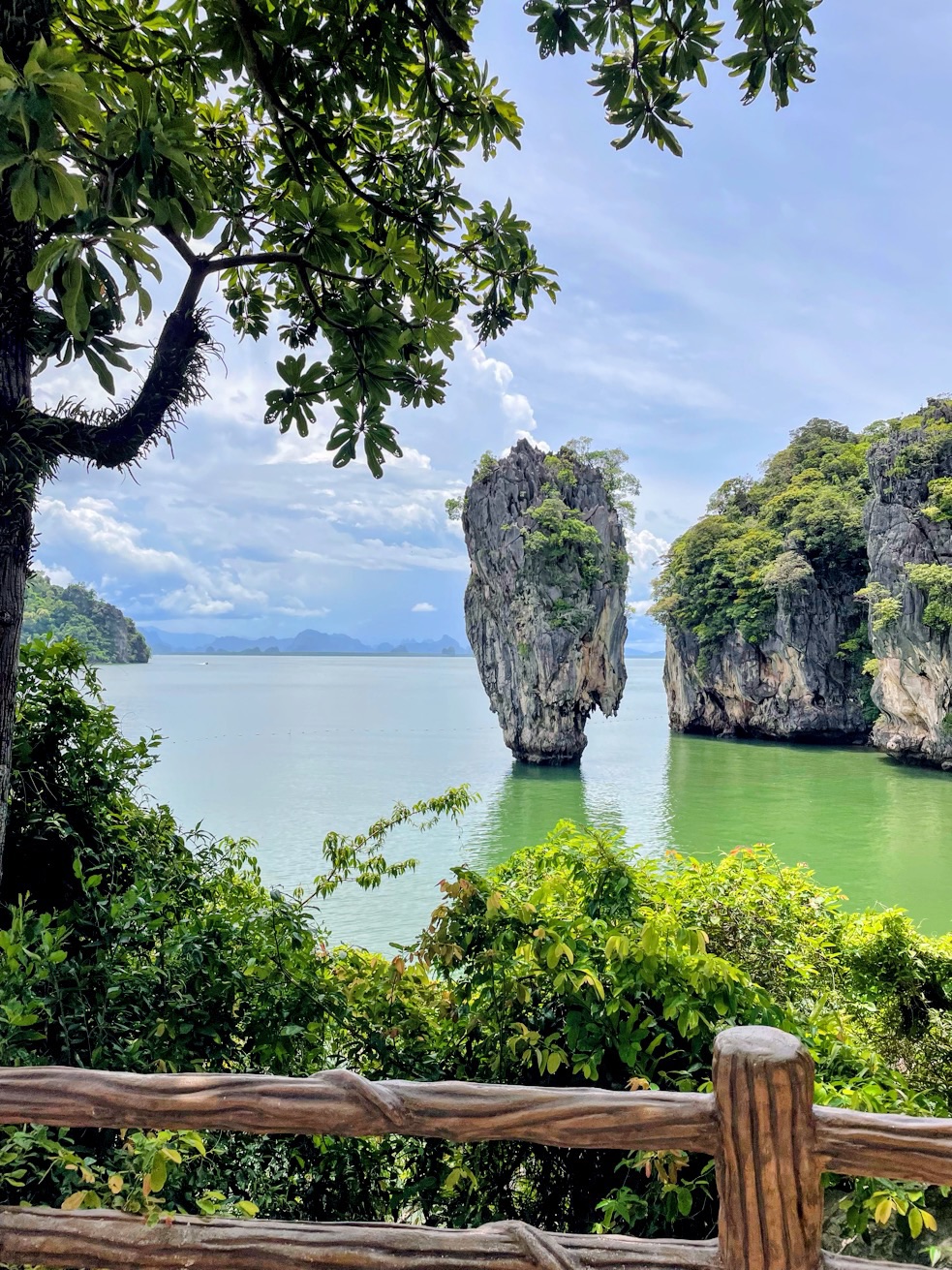
As for how Thailand ended up on the shortlist to begin with, it’s because of photos we’d seen of Khao Phing Kan in the Phang Nga Bay, and also known as James Bond Island. It looked beautiful and completely otherworldly.

It’s got towering limestone cliffs rising straight out of emerald-green water with boats weaving through dramatic rock formations. It’s got landscapes that didn’t even look real. We wanted to see it with our own eyes.
We also knew it would be an incredible cultural learning experience—something very different from our day-to-day life in Utah. New food, new customs, new language, new perspectives. That kind of travel stretches you in the best possible way.
Real-world Advice
One of the biggest advantages we had during planning was knowing a handful of people who had lived in Thailand for extended periods of time. I have an aunt and two neighbors who had served missions there and learned the language well enough to communicate comfortably with Thai locals.
Real-world recommendations can be so much better than just internet reviews. In addition to answering questions about places to see, I was able to get some hands on training on a few key Thai phrases.
I specifically wanted to learn three things before the trip:
- Thank you
- Where’s the bathroom?
- Not spicy
What else could you possibly need to know?
The Tonal Thai Language
The Thai language isn’t as simple as knowing how to pronounce a word. It requires a singsong voice.
Thai is a tonal language, which means the pitch of your voice changes the meaning of a word. The same sound can mean completely different things depending on how you say it.
I tried very hard to get it right—but as you’ll see, results were mixed.
The Three Thai Phrases I Tried to Learn
1. Thank You
Thai:
ขอบคุณ
Polite form (for women):
ขอบคุณค่ะ
Pronunciation: khàawp-khun kah
Tone guide:
khàawp — low tone
khun — mid tone
kah — falling tone (start high)
Polite form (for men):
ขอบคุณครับ
Pronunciation: khàawp-khun khráp
Tone guide:
khàawp — low tone
khun — mid tone
khráp — high tone
In Thai, the ending word changes depending on whether the speaker is male or female. Since I’m a woman, I used ค่ะ kah at the end. Chris used ครับ khráp.
This was probably the phrase I used the most during the trip. Visitors say it often enough that Thai people can usually recognize what you’re trying to say—even if your pronunciation is lousy. Still, we made a real effort to say it correctly to be polite and respectful.
2. Where’s the Bathroom?
Thai:
ห้องน้ำอยู่ที่ไหน
Pronunciation: hâwng-náam yòo thîi nǎi
Tone guide:
hâwng — falling tone
náam — high tone
yòo — low tone
thîi — falling tone
nǎi — rising tone
Unfortunately, the one time I needed to convey this message, I was apparently incoherent. The poor Thai woman I was speaking to had no idea what I was trying to say. Can you blame me with all those tone changes in one sentence?
I actually had a video saved on my phone of my neighbor saying these phrases so I could reference it if needed, but I wasn’t able to find the video at the time.
I ended up using the Google Translate app and the Thai woman was able to point me towards the nearest bathroom.
3. Not Spicy
Thai:
ไม่เผ็ด
Pronunciation: MY pet
Tone guide:
mâi — falling tone
phèt — low tone
This one was critically important to me. I was genuinely worried that I wouldn’t be able to eat anything in Thailand because I can’t handle spicy food at all.
Thankfully, this phrase was the easiest one to say, and anyone I said it to instantly knew what I needed. They’d chuckle upon hearing my request and oblige with a zero-spice entree.
Up Next
Thailand was incredible. Definitely some core memories made there. Keep reading this series to learn everything you need to know when planning a visit to Thailand.
Enjoyed this post? Subscribe below to get new posts by email!
Click here to see all posts related to Thailand!
Leave a Reply